
Upcoming Programs & Events
Day in the Life of a Lighthouse Keeper Tour
April 19, 2024Embark on a Time-Traveling Adventure with the Day in the Life of a Lighthouse Keeper Tour! Hey, Time Traveler! Experience the fascinating world of…
Storytime & Crafts for Kids
April 20, 2024Discover Adventures with Storytime & Craft for Kids! Embark on an outdoor adventure with our "Storytime & Craft for Kids" program! Join us under…
Sensory Sensitive Morning
April 22, 2024Sensory Sensitive Morning at the Lighthouse Sensory-Friendly Experiences for Children on the Autism Spectrum Welcome to our inclusive sensory-friendly program designed for children on…

About the Jupiter Inlet Lighthouse & Museum
Operated by the nonprofit Loxahatchee River Historical Society, the waterfront lighthouse, and grounds exhibits feature over 5,000 years of regional history.
In addition to offering climbing tours of the landmark 1860 lighthouse, we are the proud site of the Jupiter Inlet Lighthouse Outstanding Natural Area, National Conservation Lands.
Contribute to the future of history
Your generous gift supports the Society’s operation of the Lighthouse & Museum and its mission. Celebrating 50 years of nonprofit service.








At a Glance
DAYS & HOURS:
Admission: Tuesday – Sunday, 10:00am – 4:00pm
Gift Shop: Tuesday – Sunday, 10:00am – 5:00pm
SPECIAL HOURS:
Early Closure:
January 13 (last admission at 3:00pm; closed at 4:00pm)
January 26 (last admission at 3:00pm; closed at 4:00pm)
January 27 (last admission at 3:00pm; closed at 4:00pm)
November 23 (last admission at 1:00pm; closed at 2:00pm)
Special Open:
December 30
HOLIDAY CLOSINGS:
New Year’s Day, Easter Sunday, Memorial Day, July 4th, Labor Day, Thanksgiving Day, Christmas Eve, Christmas Day
TOUR OPTION:
Guided tours are available at 12:00pm, 1:00pm, & 2:00pm, Tuesday – Friday, with admission.
Admission Notes
TRAFFIC NOTICE:
Beginning March 13, 2023, the US1 Bridge will close for replacement. Please use Alt A1A if approaching from the south.
Due to the bridge construction, the Museum building is temporarily closed. The new Lighthouse Admissions & Gift Shop is located on the east side of the Museum parking lot. Lighthouse climbs, guided tours, and exhibits will remain open!
HEIGHT REQUIREMENT & SAFETY:
Children must be at least 48″ to climb the Lighthouse.
WEATHER:
Hours are subject to change and tours are weather permitting. Please call (561) 747 – 8380 ext. 101 for current information on weather delays and closures.
In the Spotlight
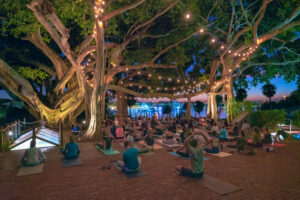
Join us for Twilight Yoga at the Light every Monday!

The Jupiter Inlet Lighthouse & Museum is operated by the Loxahatchee River Historical Society, managing partner in the Jupiter Inlet Lighthouse Outstanding Natural Area.
Sign Up For Our Email Newsletter
© Jupiter Inlet Lighthouse & Museum | 500 Captain Armour's Way, Jupiter, FL 33469